Environmental and resource management program
What if your career could help protect rivers, improve air quality, reduce waste and create healthier communities?
Environmental and resource management prepares you to take on environmental challenges with a mix of science, technology and problem-solving.
Why study environmental and resource management at ASU?
Environmental challenges don’t fit neatly into a single category, and neither should your education.
This isn’t a program where learning stays in the classroom. Through hands-on projects, field-based experiences and applied coursework, you’ll investigate environmental problems, evaluate solutions and build the skills employers are looking for. Along the way, you’ll develop expertise in environmental science, sustainability and resource management while learning how decisions made today shape the future of communities around the world.
You’ll learn to combine science, technology, policy and leadership to solve complex environmental problems. You’ll work on issues that affect everyday life, including clean water access, environmental health, pollution prevention and sustainable resource use.
Links to related resources
Undergraduate options

Environmental and resource management, BS
Our undergraduate environmental and resource management program offers hands-on projects and coursework for students seeking to understand the scientific and technological aspects of byproducts, environmental health, sustainability and natural resource conservation. Graduates go on to be expert leaders and problem solvers who work with consulting firms, government agencies and non-profit organizations to solve the global environmental challenges of the future.

Environmental and resource management, minor
Are you passionate about sustainability? Build on that interest by gaining resource management expertise. You’ll develop practical skills and knowledge to address resource challenges, enabling you to stand out in an increasingly eco-conscious job market.

Hazardous materials and waste management, certificate
Develop the skills to handle hazardous materials safely and responsibly. By earning this undergraduate certificate, you’ll learn to identify, manage and dispose of harmful substances while protecting communities, safeguarding the environment and promoting workplace safety.
More undergraduate program information
Accelerated Master’s degree option
This degree is offered as an accelerated degree with the environmental and resource management, MS and environmental and resource management (water management), MS. The accelerated bachelor’s and master’s degree is designed to provide selected high-achieving students with the opportunity to combine advanced undergraduate coursework with graduate coursework and accelerate graduate degree completion. This program allow accelerated students to obtain a bachelor’s and master’s degree within five years.
Acceptance to the graduate program requires a separate application. Eligible students will be advised in their junior and senior years by their academic department to apply. To review eligibility requirements, please visit: The Polytechnic School Accelerated Master’s degree programs
Graduate degree options

Environmental and resource management, MS
Turn your passion for sustainability into expertise that is highly sought-after by companies and organizations. Gain the advanced skills needed to manage environmental impact, use resources more efficiently, and navigate complex regulatory environments. You’ll be well-prepared to thrive in this vital and rewarding field.

Environmental and resource management (water management), MS
Are you a systems thinker who views water as both a critical challenge and a powerful opportunity? In this highly ranked program, you can transform environmental passion into expertise. Gain a deep understanding of the science, policy and technology of water management while developing solutions to issues of scarcity, quality and sustainability.
More graduate program information
Focus areas and concentration
Students in the ERM, MS degree can concentrate their studies in two focus areas:
- Environmental management
- International environmental management and sustainable development
Students are able to apply for a concentration in Water Management or pursue a focus area in either environmental management or international environmental management and sustainable development.
Core classes for the master’s degree with focus areas in environmental management or international environmental management and sustainable development include:
- Environmental law
- Toxicology
- Chemistry of hazardous materials
Typical course work
Depending upon the focus area, students also take classes in the following subjects:
- Air pollution
- Soils and groundwater contamination
- Water and wastewater treatment technologies
- Hazardous waste management
- Industrial hygiene
- Environmental health
- Environmental chemistry
- Environmental leadership
- International environmental law and policy
- International environmental management
- Sustainable development
- Tribal environmental and natural resources management
Elective coursework from other ASU departments may be included in the program of study upon approval.
Water management concentration course work
Required classes for the water management concentration include:
- Environmental law
- Toxicology
- Water law and policy
- Water and wastewater treatment technologies
- Soils and groundwater contamination
Elective coursework from other ASU departments may be included in the program of study upon approval.
Graduate handbook
2025–26 Environmental and Resource Management Graduate Handbook
Professional licensure
ASU programs that may lead to professional licensure or certification are intended to prepare students for potential licensure or certification in Arizona. Completion of an ASU program may not meet educational requirements for licensure or certification in another state. For more information, students should visit the ASU professional licensure webpage.
STEM-designated
STEM designation makes students within the program at ASU eligible for STEM specific Scholarships, OPT extension for International Students, and expanded GI benefits for Student Veterans.
Meet our students
“With an ERM degree, you learn theoretical and practical information that you can take directly from the classroom to the workforce.”
Learn more about Shaneen
Student Profile: Shaneen Beebe
Shaneen Beebe is helping the environment through business consulting. As an independent contractor for an environmental, health and safety consulting company based in Phoenix, Shaneen writes compliance programs that help to prevent environmental hazards for businesses in various industries.
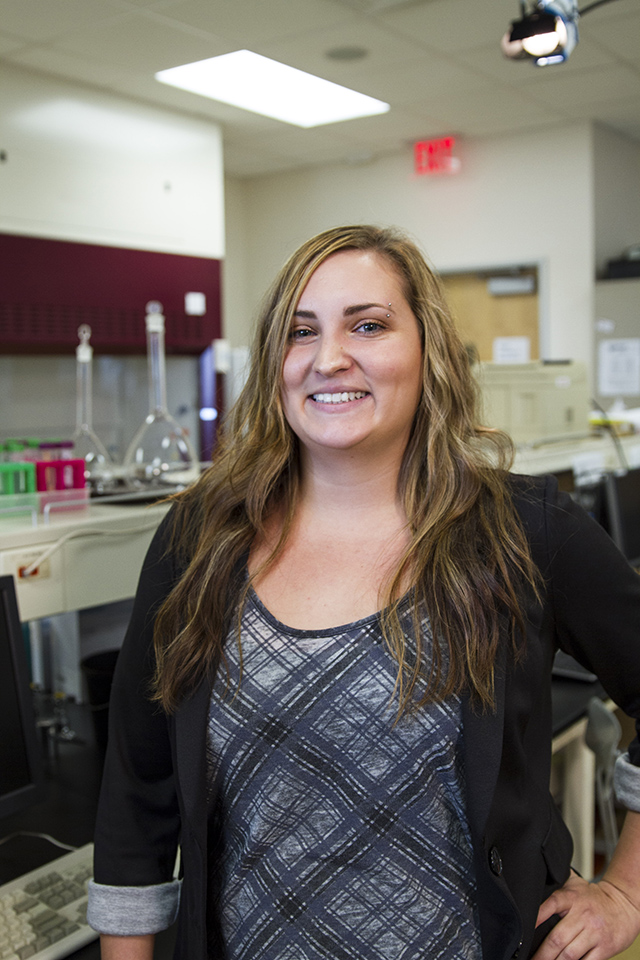 From hazardous materials management to storm water pollution prevention and chemical spill plans, her work helps companies to comply with government regulations, ensure the safety of onsite employees and keep the environment free of pollution.
Shaneen Beebe graduated with a bachelor’s degree in environmental and resource management (ERM) in 2012 and is now pursuing an ERM master’s degree as part of an Accelerated Master’s program offered by the Ira A. Fulton Schools of Engineering. Accelerated programs allow high-achieving students to earn both a bachelor’s and master’s degree within five years.
As an undergraduate Shaneen was interested in a variety of environmental-related degree programs, but chose ERM because it would make her the most marketable after graduation.
“With an ERM degree, you learn theoretical and practical information that you can take directly from the classroom to the workforce,” said Shaneen.
The ERM degrees introduce students to the industrial and regulatory aspects of the environmental, health and safety (EHS) field. Shaneen describes EHS as a field where science, management and progressive thinking come together to address significant environmental challenges. “In this field we are constantly trying to create an effective balance between sustainability, profitability and feasibility,” said Shaneen.
The EHS field requires individuals to be competent in several areas—water, air, waste, hazardous materials—and the ERM program is designed to cover each of those topics in detail.
Shaneen is interested in how humans and industrialization impact the environment and communities. Her previous research efforts include comparing wildlife in urban and non-urban areas to assist natural resource managers with wildlife relocation efforts associated with construction projects. Currently, she is researching heavy metal contamination to provide insight into how industrialization has affected pollution in cities and surrounding areas.
“The interdisciplinary nature of the ERM bachelor’s and master’s degrees is essential for succeeding in the dynamic and ever-expanding field of EHS,” said Shaneen. She also compliments the ERM program for its emphasis on developing technical writing skills. “My ERM classes have taught me how to take a complex scientific idea and communicate it in a way that is both accurate and understandable. Whether you are publishing your research in a peer-reviewed journal or writing a report for your employer, technical writing skills are absolutely necessary,” said Shaneen.
After completing her master’s degree Shaneen can see herself working to promote a positive culture of environmental and safety values in either the government or private sector, or pursuing a doctorate in public health.
“I will be happy working in any job that allows me to positively influence society and the natural world on a broad level—and the ERM program has made these types of jobs an attainable reality.”
“It’s rewarding to know that my work is being used by the EPA—and also a great résumé booster,” said Frank who will travel with two ERM professors to Mexico for a two-day training.
Learn more about Frank
Student Profile: Frank Brown
Frank Brown chose to study environmental and resource management (ERM) because of his hometown: Austin, Texas. After moving from Texas to study at Arizona State University, Brown continued to reflect on the “green culture” and sustainable infrastructure that he says characterized his hometown. “I grew up playing in the woods and swimming in the green belt, and as an adult the health of the environment is very important to me.”
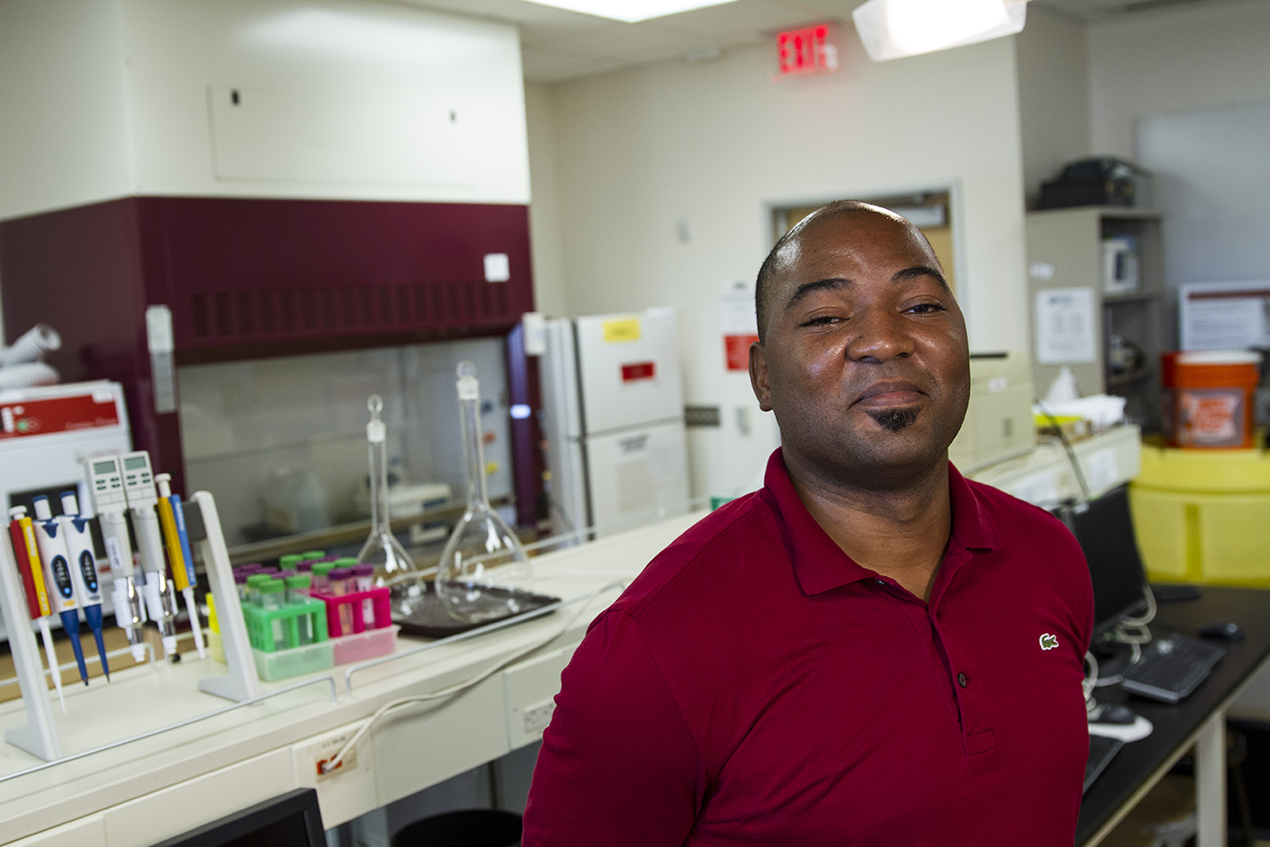
Currently a senior, Brown participates in a research group led by assistant professor Kiril Hristovski that focuses on using nanoparticles to remove and recover contaminants from water with excessive nutrients, such as run-off from farmlands. Brown’s research focuses specifically on the removal and recovery of phosphate.
“It’s exciting research because recovering nutrients, like phosphate, from bodies of water means that they can be reused, which is cheaper than mining new nutrients and extends the life of a non-renewable resource,” said Brown.
Brown is conducting this research in conjunction with the Fulton Undergraduate Research Initiative (FURI) program, which includes a research stipend and the opportunity to present his research at a biannual symposium.
Brown is also working as a research assistant on an EPA-funded international project to develop a training program for the metal-plating industry in Mexico, which will help industrial wastewater treatment operators to improve their skillset and maintain a safe work environment.
“It’s rewarding to know that my work is being used by the EPA—and also a great résumé booster,” said Frank who will travel with two ERM professors to Mexico for the two-day training in early June.
“I always wanted to conduct research but I didn’t know that I would get the chance as an undergraduate,” said Brown. He credits this opportunity to hard work in the classroom and close relationships with his professors—a strength of the ERM program.
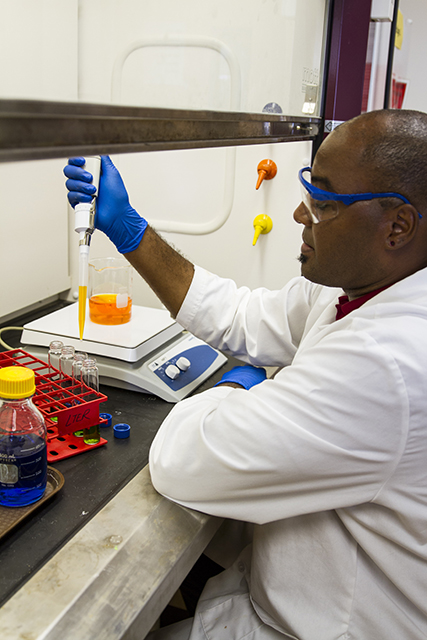 “The ERM professors have years of relevant industry experience and understand how to apply their knowledge in the classroom,” said Brown. “Plus, they care about your success and it shows.”
In addition to undergraduate research, Brown is the Environmental Health and Safety Team Lead for an ASU EcoCAR3 team. The EcoCAR3 competition is a 4-year contest between 17 universities, hosted by General Motors and the U.S. Department of Energy, in which teams compete to create economical, marketable and innovative alternative fuel and hybrid technologies.
Brown has created safety trainings and emergency response procedures, such as a chemical spill cleanup action plan, to keep team members and the work environment safe. He also conducts safety checks and ensures proper use of standard operating procedures and safety protocols.
In addition to undergraduate research and hands-on learning opportunities, Brown said the ability to network with professionals in environmental fields through projects and conferences has been a highlight of the ERM program. “I recently made strong connections after I presented at the Environmental Professionals of Arizona Gatekeeper Regulatory Roundup,” said Brown, speaking about an annual conference that focuses on the evaluation and control of hazardous wastes generated in Arizona.
“These connections are important because the people you meet may end up being your future employers, faculty advisors or leads to jobs. If you don’t make yourself visible in industry then you decrease your opportunities and potential,” said Brown.
From here, Brown is considering a variety of doctoral programs or a master’s degree in environmental technology management—a graduate-level extension of the ERM program.
After graduate school and a decade of industry experience, Brown said his dream job would be to do private consulting back home in Austin—the city that first inspired him to fuse his love of the environment with his knack for scientific research.
“The cohorts were professionally executed and the wealth of knowledge of the Environmental and Resource Management faculty is remarkable.”
Learn more about Shaneen
Alumni Profile: Robert Jolley
 Robert Jolley
Environmental and Resource Management Graduate Student
After 25 years of private, state and federal work experience—enhanced by his recent completion of the Environmental and Resource Management master’s degree program offered by Arizona State University—Robert Jolley is responsible for managing the Federal Helium Program.
As Field Manager, Jolley oversees a finite supply of crude helium contained in a helium-rich natural gas field near Amarillo, Texas.
Managed by the Bureau of Land Management (BLM), the Federal Helium Program supplied helium for Naval blimps beginning in the 1920s and during World War II, the Kennedy administration’s space initiatives in the 1960s and 1970s and has supplied crude helium to private industries for use in MRIs, computers and other technology-related purposes since the mid-1990s. Currently the Federal Helium Program generates more than $200 million in public revenue each year.
But after nearly 100 years of government operations, the Federal Helium Reserve is nearing depletion and, as mandated in the Helium Stewardship Act of 2013, the BLM is required to dispose of the Federal Helium System by September 30, 2021.
As a result, Jolley said that, like many environmental engineers, he “walk[s] a tightrope” to manage what is left of our non-renewable resources, while also meeting societal demands.
Currently the BLM’s Amarillo reserve produces 70 percent of the U.S. demand for helium and 25 percent of the world’s demand. Other plants exist in Algeria, Russia and Qatar, and when the Amarillo supply is gone in 2021, primary users like the Department of Defense, the Department of Energy and NASA will have to turn to those countries and a few remaining U.S. sources to meet their helium needs.
“The situation is challenging, but I enjoy challenges and will usually take the difficult path because, though harder, it provides the most opportunity for growth,” said Jolley.
In addition to managing the helium reserve, this personal philosophy influenced his decision to serve in the United States Marine Corps, to complete a bachelor’s degree in civil engineering in his 30s and a master’s degree in his late 40s.
While earning his master’s degree, Jolley worked remotely from Washington D.C., was deployed in Iraq in 2008 and again in Afghanistan in 2012, and served as the sustainability lead for the Army Materiel Command. “During my graduate program my wife and I bought and sold four houses and moved five times,” said Jolley.
Despite the challenges, Jolley said he enjoyed the long hours, cramming, papers, projects, presentations and the three-day, on-campus cohort sessions, where students from all around the country had an opportunity to meet, learn and network.
“The cohorts were professionally executed and the wealth of knowledge of the Environmental and Resource Management faculty is remarkable,” said Jolley. Having visited the Polytechnic campus many times, Jolley said the location and facilities make it “a world-class educational facility.”
“Also, the diversity of the student body and the networking that is built into the program has been invaluable in my career,” said Jolley. In one instance, Jolley was working to implement an Environmental Management System and used connections from his graduate studies to provide a BLM group with a learning tour of a Phoenix-based manufacturer that had been using a similar system to address their environmental concerns.
“The ability to discuss environmental issues with professionals from around the country was a notable benefit of the program,” said Jolley.
Above all, Jolley recommends the Environmental and Resource Management program because “the classes are timely and provide the knowledge, skills and connections needed to succeed in environmental fields right now.”
“The practical application of environmental principles developed during the Environmental and Resource Management program prepares you to manage hazardous wastes, air emissions, water quality, recycling, renewable energy, energy conservation and more,” said Jolley.
“Proper management of these issues enhances the quality of life for the entire population and makes the world a better place to live.”
Contact us
Undergraduate program
Undergraduate advising
[email protected]
480-727-1874
Graduate program
Faculty advisor
Kiril Hristovski – Program Chair
Graduate advising
[email protected]
480-727-1874